
The Witch's Moon Garden: The Magic and Meaning of Flowers That Bloom After Dark
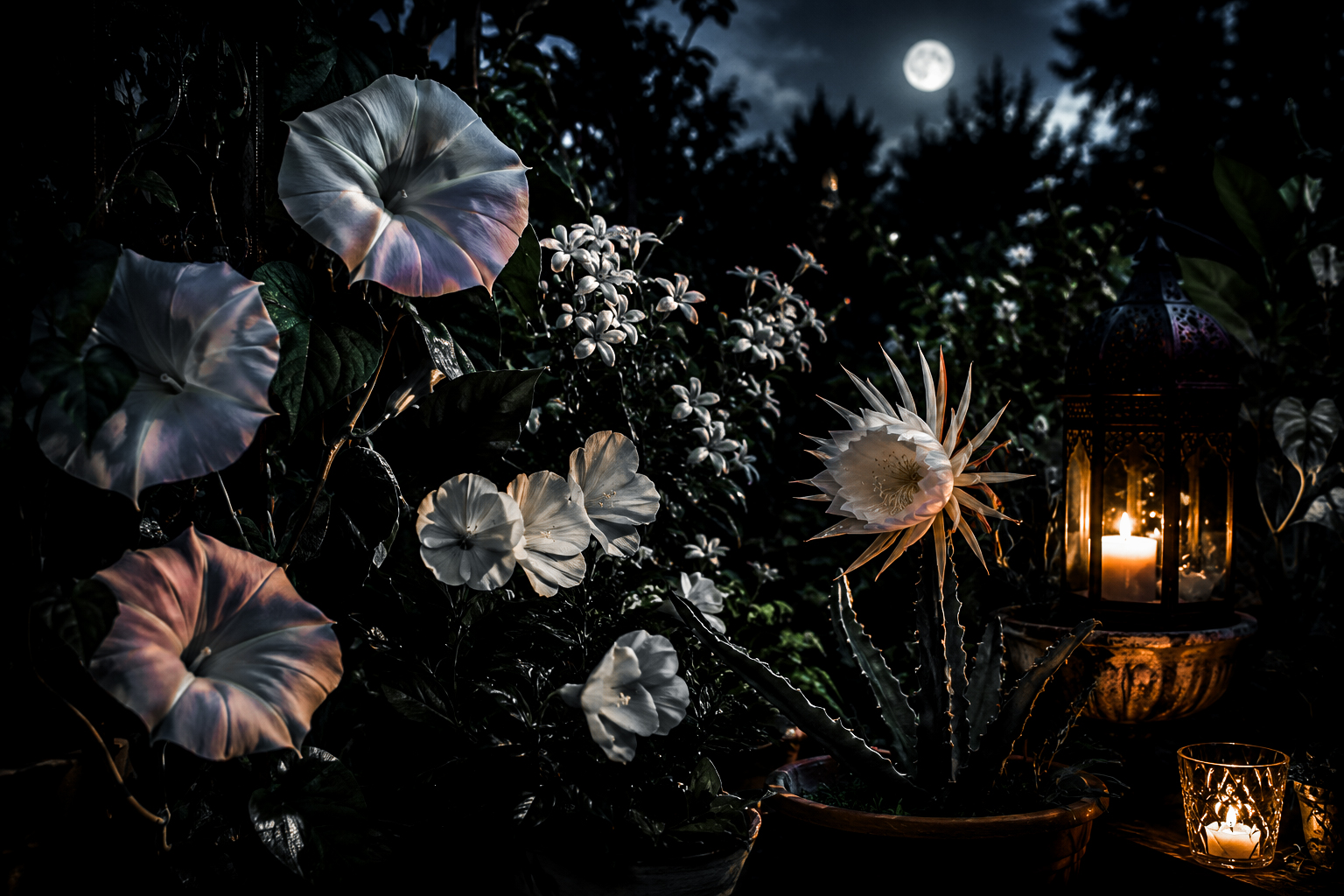
Cancer season belongs to the Moon.
As the Sun journeys through this deeply intuitive water sign, our attention naturally shifts toward the quiet hours of the evening. The world softens after sunset. Shadows lengthen. The air cools. And while many flowers close their petals for the night, others are only just beginning to awaken.
These are the flowers of the moon garden.
They unfurl beneath silver light instead of golden sunshine. They release intoxicating fragrances into the darkness. They attract moths instead of butterflies and have inspired centuries of folklore, herbal traditions, and magical practices.
If you've ever wandered through a garden after dusk and felt that it held a different kind of energy, you weren't imagining it.
Some plants were made for moonlight.
What Is a Moon Garden?
A moon garden is designed to come alive after sunset. Traditionally, these gardens feature white or pale-colored flowers that reflect moonlight, silver foliage that shimmers in the dark, and plants whose fragrance becomes stronger in the evening.
Moon gardens became especially popular during the Victorian era, when evening strolls through scented gardens were a cherished pastime. Long before then, many cultures planted nighttime flowers near temples, sacred spaces, and meditation gardens because they believed these blooms carried lunar energy and heightened intuition.
Unlike bright daytime gardens that celebrate abundance and activity, moon gardens invite stillness.
They ask us to slow down.
To observe.
To listen.
It is no coincidence that Cancer season encourages many of these same qualities.
Why Cancer Season Connects So Deeply with Moon Gardens
Cancer is ruled by the Moon, making it one of the most emotionally intuitive seasons of the year.
While Aries teaches action and Capricorn teaches ambition, Cancer teaches presence. It reminds us to nurture what feels meaningful, protect what we love, and trust the wisdom that comes from feeling instead of forcing.
A moon garden reflects this perfectly.
It is not loud.
It does not compete for attention.
Its beauty reveals itself only to those willing to linger after dark.
Like Cancer itself, its magic is quiet.
Moonflower: Opening to the Night
Perhaps no flower embodies lunar magic more beautifully than the moonflower (Ipomoea alba).
Large white blossoms unfurl at dusk, almost as if responding to the rising moon. Their delicate fragrance fills the evening air before the flowers close again with the morning light.
Spiritual Meaning
Moonflowers symbolize:
intuition
hidden potential
transformation
trust in unseen timing
They remind us that not everything beautiful happens in broad daylight. Some of life's most meaningful moments unfold quietly, away from the world's attention.
Magical Correspondences
Moonflowers are often associated with:
lunar rituals
dreamwork
psychic development
feminine divine energy
emotional healing
Because they bloom only for a short time, they also teach us to appreciate fleeting beauty.
Evening Primrose: A Flower of Healing and Hope
Evening primrose opens as daylight fades, offering bright yellow blossoms to the coming night.
For generations, Indigenous communities and herbalists have valued evening primrose for its medicinal properties, particularly its seeds, which are used today to produce evening primrose oil.
Spiritual Meaning
Evening primrose represents:
renewal
resilience
emotional balance
quiet strength
It blooms each evening faithfully without seeking recognition.
Its lesson is simple.
Consistency creates its own kind of magic.
Magical Correspondences
Traditionally, evening primrose has been connected with:
emotional healing
attracting peace
encouraging optimism
strengthening intuition
Night-Blooming Jasmine: The Fragrance of Hidden Magic
Few plants transform the evening quite like night-blooming jasmine (Cestrum nocturnum).
As darkness settles, its tiny blossoms release one of the strongest natural fragrances found in any garden. The scent drifts through the air long before the flowers themselves become visible.
Spiritual Meaning
Night-blooming jasmine reminds us that presence is not always visual.
Some gifts cannot be seen.
Only experienced.
It symbolizes:
mystery
attraction
intuition
spiritual awakening
Magical Correspondences
Many magical traditions associate jasmine with:
prophetic dreams
love magic
lunar rituals
meditation
attracting peaceful energy
Its fragrance alone has long been considered a doorway into deeper contemplation.
Queen of the Night: The Rare Beauty of Night-Blooming Cereus
The night-blooming cereus, often called the Queen of the Night, is legendary among gardeners.
Its enormous blossoms open for just a single evening before fading with the sunrise. People often gather late into the night simply to witness the spectacle.
Its rarity has made it a symbol of life's most extraordinary moments.
Spiritual Meaning
The Queen of the Night represents:
impermanence
divine timing
miracles
fleeting opportunities
It reminds us that some experiences cannot be postponed.
When the flower blooms, you must be present to witness it.
Magical Correspondences
This remarkable cactus has become associated with:
transformation
spiritual awakening
life transitions
embracing change
Its brief bloom teaches us to value presence over permanence.
Datura: Beauty Wrapped in Caution
Datura is one of the most mysterious plants associated with moon gardens.
Its large trumpet-shaped flowers open beautifully in the evening, making it visually stunning beneath moonlight. Throughout history, datura has appeared in folklore, mythology, and historical accounts of witchcraft across many cultures.
It has been associated with deities such as Hecate and has long been viewed as a plant of crossroads, visions, and altered states.
An Important Safety Note
Despite its beauty and historical significance, every part of the datura plant is highly toxic.
The leaves, flowers, seeds, roots, and nectar contain powerful compounds that can cause severe poisoning, hallucinations, organ damage, and can be fatal if ingested.
For this reason, datura should never be consumed or used experimentally. It is best appreciated as a fascinating botanical specimen and a piece of magical history rather than a practical ritual plant.
Respecting a plant sometimes means admiring it from a safe distance.
Creating Your Own Moon Garden
You do not need a sprawling backyard to create a moon garden.
Even a small patio or balcony can become a sanctuary for evening reflection.
Consider incorporating:
white flowering plants
silver-leaved herbs
soft ornamental grasses
fragrant night bloomers
smooth stones
crystal accents
lanterns or candles
a comfortable place to sit beneath the stars
The goal is not perfection.
It is presence.
Allow your garden to become a place where you step away from constant stimulation and reconnect with the slower rhythm of the natural world.
A Moon Garden Ritual for Cancer Season
Choose an evening when the Moon is visible.
Step outside with a candle or lantern and sit quietly among your plants.
Take several slow breaths.
Notice the sounds that only emerge after sunset. The breeze moving through leaves. The scent of flowers opening for the night. The insects beginning their evening chorus.
Ask yourself:
What part of me is ready to bloom quietly?
Where have I been seeking validation instead of presence?
What wisdom appears only when I slow down?
You do not need immediate answers.
The Moon has never been in a hurry.
There is something profoundly comforting about flowers that wait for darkness before revealing themselves.
They remind us that not all beauty belongs to the daytime.
Some gifts are meant for stillness.
Some transformations happen quietly.
Some magic only reveals itself beneath the Moon.
As Cancer season encourages us to move inward and reconnect with intuition, let the moon garden become a teacher.
Step outside after sunset.
Breathe deeply.
Look closely.
The night is blooming.