
The Magic of Mushrooms: Folklore, Fairy Rings, and the Hidden World Beneath Our Feet
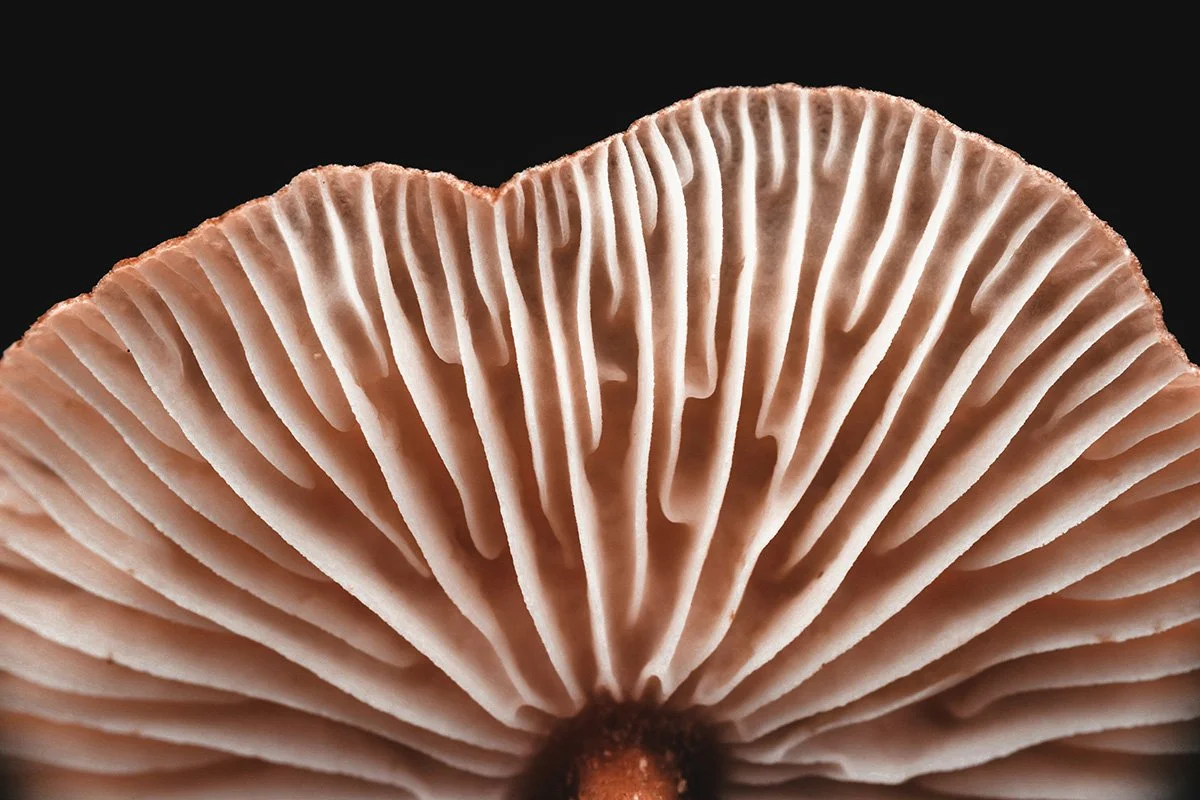
They seem to appear almost overnight. One morning, the forest floor is little more than damp leaves, fallen branches, and moss. Then the rain comes, the air cools, and suddenly mushrooms rise from the earth in strange clusters. They appear beneath ancient trees, across decaying logs, and sometimes in circles so precise they look deliberately drawn.
It is little wonder our ancestors gave them stories.
Mushrooms occupy an unusual place in the natural world. They emerge from darkness, thrive alongside decay, and can appear briefly before disappearing again. Much of the organism responsible for what we see above ground remains completely hidden beneath our feet.
For centuries, that strangeness has connected mushrooms with fairies, spirits, transformation, death, luck, danger, and the unseen world. But perhaps the most fascinating thing about mushrooms is that the truth beneath the folklore is every bit as strange.
Mushrooms Are Only the Part We See
When you find a mushroom pushing through the soil, you are usually seeing only one visible part of a much larger organism. Many fungi exist primarily as networks of microscopic threads called mycelium, which spread through soil, wood, and other organic matter. What we recognize as a mushroom is the fruiting body produced by certain fungi.
By the time a mushroom appears above ground, much of its story has already been unfolding somewhere we cannot see. The fungus may have been growing through soil or wood long before conditions were right for it to produce a mushroom.
There is something inherently magical about that idea. The mushroom becomes evidence of an invisible world that existed long before we noticed it, which may help explain why humans have spent so much time imagining what else might be happening beneath the forest floor.
Why Mushrooms Became Symbols of the Unseen
Our ancestors did not understand fungal biology the way we do today. Imagine walking through a field one morning and discovering a nearly perfect ring of mushrooms where nothing seemed to exist the day before. Without an obvious explanation, it would be easy to wonder whether something had visited during the night.
Folklore filled the spaces where explanations had not yet arrived. Across European traditions, mushrooms became associated with fairies, elves, spirits, witches, and other supernatural beings. Their sudden appearance suggested that something might be happening beyond ordinary human perception.
Mushrooms did not seem to grow in the familiar way that crops or garden plants did. They appeared mysteriously, sometimes in strange formations, and often in places already associated with wildness and decay. That made them perfect inhabitants of the supernatural imagination.
Fairy Rings and the Danger of Stepping Inside
Few pieces of mushroom folklore are as enduring as the fairy ring.
Fairy rings are circles or arcs of mushrooms that can form naturally as underground fungal growth expands outward. We now have a biological explanation for them, but to generations before us, those strange circles looked like evidence of something far less ordinary.
Across British and European folklore, fairy rings were sometimes believed to mark places where fairies had gathered to dance during the night. The stories were not always charming. Depending on the tradition, stepping inside a fairy ring could leave a human trapped in the dance, confused, exhausted, enchanted, or unable to return easily to the ordinary world.
Some tales played with an even stranger idea: time itself behaved differently within fairy spaces. A person might believe they had spent only a short while among the fair folk, only to discover that far more time had passed outside the circle.
These stories reflect something important about older fairy folklore that modern interpretations sometimes soften. The fair folk could be beautiful and fascinating, but they were not necessarily safe. Wild beauty demanded respect.
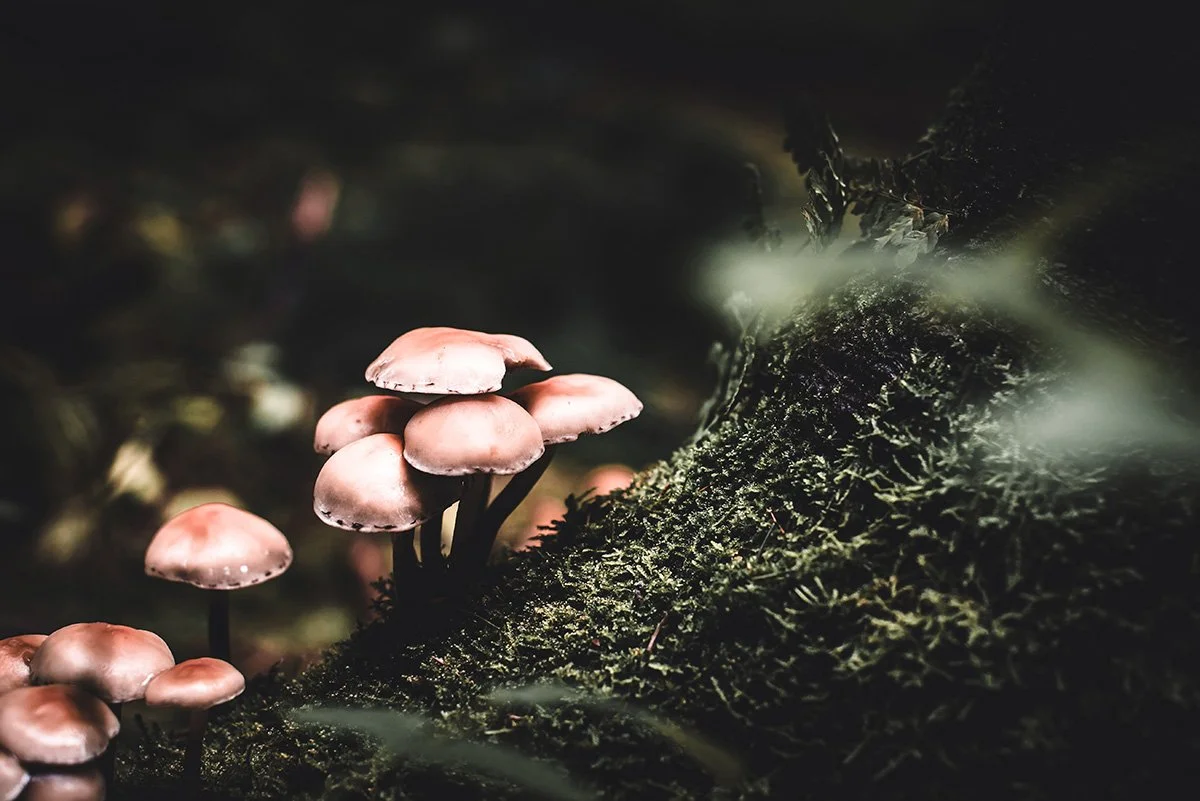
Mushrooms, Witches, and Strange Old Names
Mushrooms and fungi have collected wonderfully eerie names over the centuries. Fairy stools, elf cups, witch's butter, devil's urn, dead man's fingers, and similar names reveal how readily people connected fungi with the supernatural.
Part of that association probably comes from where fungi appear. They flourish on fallen trees, damp forest floors, old fields, decaying wood, and other places where decomposition is already taking place. These landscapes naturally lend themselves to stories about death, spirits, and hidden things.
But fungi are not simply creatures of decay. Their relationship with decomposition is part of what allows forests and other ecosystems to continue functioning. That makes their symbolism much more interesting than a simple association with death.
The Strange Magic of Decay
We tend to think of decay as an ending. The forest offers a different perspective. When a tree falls, its story does not simply stop. Fungi, bacteria, insects, and countless other organisms begin breaking down its tissues. Nutrients eventually return to the surrounding ecosystem, where they can become part of new growth. What appears to us as destruction is also transformation.
Mushrooms sit beautifully within this cycle. They remind us that nature rarely separates death from life as neatly as humans do. Fallen leaves become part of the soil. Dead wood becomes habitat. Old growth nourishes what comes next.
This is one reason mushroom symbolism feels particularly appropriate in autumn. As leaves begin falling and plants die back, fungi make the process of transformation visible. They show us that the seasonal descent is not simply a story of loss. It is also a story of return.
The Spiritual Meaning of Mushrooms
Modern spiritual interpretations often connect mushrooms with transformation, hidden knowledge, interconnectedness, death and rebirth, and mysteries that exist beneath ordinary appearances. Looking at the biology and folklore surrounding fungi, it is easy to understand why.
A mushroom asks us to reconsider how we measure growth. We usually look for visible proof that something is changing: the achievement, the finished project, the new beginning, or the dramatic transformation. Yet much of life does not happen that way.
Sometimes the most important growth occurs before anyone else can see it. Thinking, healing, questioning, grieving, learning, and slowly changing your perspective may not produce immediate evidence, but that does not make the process less real.
The mushroom appears only after the hidden work has already begun.
Mycelium and the Hidden Forest
One of the most fascinating parts of fungal life happens underground. Mycorrhizal fungi can form relationships with plant roots in which fungi and plants exchange resources. These associations can become part of extraordinarily complex forest ecosystems involving roots, fungi, microorganisms, soil, water, and nutrients.
You may have heard this described as the "wood wide web." The popular idea that trees simply use fungal networks as an underground internet to chat with one another is an oversimplification of complicated ecological relationships, but the reality is fascinating enough without embellishment.
What appears above ground to be a collection of individual trees is supported by an enormous network of relationships beneath the soil. That offers its own spiritual lesson. Independence and interconnectedness are not necessarily opposites. We can exist as individuals while remaining deeply dependent on communities, environments, and relationships we rarely notice.
Mushroom Folklore Was Not Always Friendly
It is easy to romanticize old mushroom folklore, particularly when fairies are involved, but many traditional stories functioned as warnings.
Some mushrooms are poisonous, and others can cause severe illness or death. Before modern field guides, toxicology, and identification knowledge, unfamiliar fungi presented a genuine danger. A story warning children not to touch mushrooms growing inside a fairy ring may have carried supernatural reasoning, but it also encouraged caution around something potentially harmful. That caution still matters.
A Note About Mushroom Safety
Never identify an edible mushroom based on folklore, a photograph, magical correspondence, social media, or an article like this one. Some dangerous mushrooms can resemble edible species closely enough that mistakes may have serious consequences.
If you are interested in mushroom foraging, learn from qualified local experts and use reliable identification resources appropriate to your region. There is no spiritual requirement to harvest a mushroom simply because you find it interesting. Sometimes the most respectful interaction is to admire it, photograph it, and leave it exactly where it is.
A Mushroom Walk for Early Autumn
You do not need to gather anything to explore mushroom symbolism. After several days of damp weather, take a slow walk through a forest, park, or other natural area and pay attention to the places you normally overlook. Look beneath trees, around fallen wood, along mossy edges, and beside shaded paths.
If you find mushrooms, spend a moment observing where they have appeared. Notice the relationship between the fungus and its surroundings rather than focusing only on the mushroom itself.
You might use the walk to consider a few questions. What has been growing quietly beneath the surface of your own life? What are you ready to allow to decompose instead of carrying into another season? What could become nourishment if you stopped treating every ending as a failure? Where are you more connected and supported than you usually recognize?
There is no need to turn the moment into elaborate spellwork. Observation can be ritual too.
Why Mushrooms Belong to Autumn
Something is fitting about noticing mushrooms as the year begins its descent toward darkness. Autumn asks us to confront the reality that everything living participates in cycles of growth, decline, death, and renewal. Mushrooms make that cycle impossible to ignore. They appear among fallen leaves, decaying trees, wet soil, and the remains of summer growth, turning what looks like an ending into part of an ongoing ecological process.
Nature does not cling to a single form forever. It breaks things down, redistributes them, and builds again. Perhaps that is why mushrooms feel so at home in fairy tales, folklore, and witchcraft. They inhabit the strange territory between what is disappearing and what is quietly becoming possible.
Mushrooms have spent centuries carrying some of our strangest stories.
Fairies danced around them, supernatural beings lent them their names, and travelers were warned not to step inside their circles. They became symbols of death, danger, mystery, and worlds that existed just beyond ordinary human perception.
Beneath all of that folklore lies something that may be even more fascinating. An enormous hidden world is living beneath our feet, and most of the time we never see it. Then the rain comes. The conditions change. A mushroom pushes through the soil, and something that had been invisible suddenly reveals itself.
Maybe that is the real magic of mushrooms. They remind us that just because we cannot see something growing does not mean nothing is happening. Sometimes an entire world is forming underground.